Survival of the Fattest — Are Lean and Resilient Mutually Exclusive?
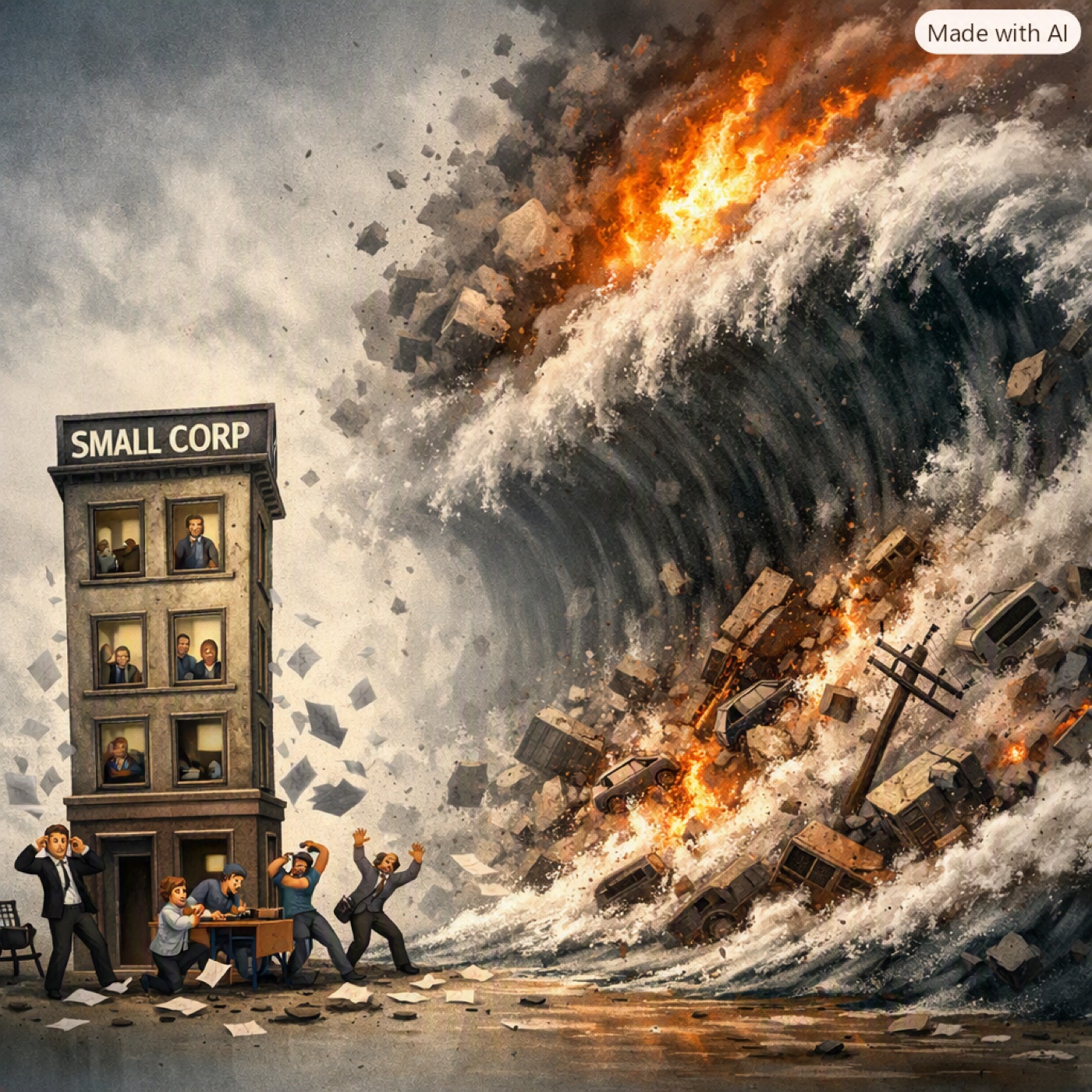
The relentless drive to do more with less is quietly eroding the reserves organisations need when business as usual becomes business unusual.
Last year, my colleague William Taylor and I presented a thought piece on this topic at the Tertiary Education Facilities Management Association (TEFMA) Conference in Brisbane — and I use the term “thought piece” loosely, since we were still thinking out loud as we delivered it!
That said, the gist of the message was that in our experience, the incessant drive to do more with less was eliminating, or at least eroding, the resources and the ability to plan for, prepare for, respond to and recover from those major circumstances that are well outside the realms of business as usual. Our shared experience (aside from a collective 60+ years in uniform) related to working together in the support services at a large tertiary institution the size of a small town, but where service expectations were well out of kilter with resources available.
Now at this point, I can almost see the smirks and raised eyebrows from those who consider the public sector as over-resourced. But we had solid sector benchmarking information to show that we were running not just on the proverbial “smell of an oily rag” but on the faint odour where the oily rag, long since removed, had once been. We had a fantastic team of people delivering outstanding levels of performance on a daily basis; so, we were probably our own worst enemies as, come what may, we kept delivering.
It became clear over time that, when every change proposal or new plan came along, things like Finance, Health & Safety and Sustainability would very rightly be considered. But no one really considered Resilience, even though the connections to Health & Safety and Sustainability were clear and present.
Which brought us to the point we were really trying to make. When you are planning or proposing changes please think about Resilience. Think about your organisation’s main risks, apply Murphy’s Law (if it can go wrong, it probably will and at the least convenient time), figure out what flex, reserves and resources you will need when BAU becomes Business Unusual.
The answer is that there is no absolutely correct answer — other than “for goodness’ sake make sure you plan for the worst and hope for the best”, not the other way around! Each organisation will have different needs and a different context. Too much held in reserve probably isn’t financially sustainable, especially for small entities, whilst too little may mean a business fragility that doesn’t weather the first minor squall.
So, each organisation needs to decide if their three planning bears have got the Resilience porridge just right; and it may be time to get a resilience Goldilocks (and I do know one) to check it out just to be sure! And if you don’t know where to start, give us a call. We can point you in the right direction.